Adapted from an article originally published by North Shore News about Cascadia Green Development and its approach to building sustainable, connected communities in North Vancouver.
For Cascadia Green Development, property development is about more than constructing buildings. It is about creating places that strengthen the communities around them.
Based in North Vancouver, Cascadia Green Development has built its approach around the idea of sustaining communities, combining environmental responsibility, social connection and economic viability within the development process.
The company’s philosophy reflects a broader view of sustainability, one that considers how people live, work and interact with their neighbourhoods as much as the physical buildings themselves.
Building Communities, Not Just Properties
From its beginnings on the North Shore, Cascadia Green Development has focused on creating places that contribute to the communities in which they are built.
Founder and CEO Farzad Mazarei established the company with a vision of development that goes beyond the traditional relationship between land, buildings and financial return.
The goal is to create neighbourhoods where residents feel connected to one another and where development contributes positively to the existing community.
That philosophy influences how Cascadia approaches everything from site selection and project planning to architecture, public spaces and construction.
Rather than viewing a project as an isolated building, the company considers how it will interact with the surrounding streets, businesses, residents and neighbourhood.
A Broader Definition of Sustainability
For Cascadia Green Development, sustainability is not limited to environmental building features.
The company’s approach has historically been based on three interconnected considerations: environmental responsibility, social sustainability and economic prosperity.
Environmental Responsibility
Respect for the environment begins at the design stage.
Thoughtful planning can reduce the environmental impact of a development while allowing buildings to respond more effectively to the communities and natural surroundings in which they are located.
This includes considering new construction technologies, efficient building systems and design solutions that minimize unnecessary environmental impacts.
For Cascadia, sustainable development also means thinking beyond an individual building and considering how neighbourhood design influences transportation, walkability and everyday living.
Social Connection
The social side of sustainability is equally important.
A neighbourhood succeeds when people have opportunities to interact, access local services and develop meaningful connections with the people around them.
Cascadia’s developments therefore emphasize spaces that support community life, including pedestrian-oriented streets, shared spaces, commercial amenities and places where residents can naturally meet one another.
The objective is to create developments that become part of the social fabric of their neighbourhood rather than functioning as isolated residential projects.
Economic Prosperity
Sustainability must also make economic sense.
Successful development requires projects that are financially viable for investors and partners while also responding to the realities facing residents and homebuyers.
Cascadia has approached economic sustainability through a broader idea of prosperity: creating value not only through financial returns, but through developments that contribute to how people live, work and participate in their communities.
Balancing affordability, accessibility, investment performance and construction quality is therefore an important component of the company’s development philosophy.
The Importance of Walkable Neighbourhoods
One of the ideas at the heart of Cascadia Green Development’s approach is walkability.
The company views the pedestrian experience as an important measure of a successful neighbourhood.
When homes, businesses, amenities and public spaces are positioned within comfortable walking distance, people are more likely to interact with their surroundings and with each other.
Streets, laneways, plazas and public spaces become more than ways of moving from one destination to another. They become places where community life takes place.
Prioritizing the pedestrian experience can also reduce dependence on vehicles for everyday activities while supporting local businesses and creating more active neighbourhoods.
For Cascadia, designing for people at street level is therefore an important part of creating places that genuinely feel alive.
A North Vancouver Company With Local Roots
Cascadia Green Development’s approach is closely connected to its North Shore origins.
The company was established in North Vancouver and has developed much of its experience through projects within the Lower Mainland.
That local connection has shaped an approach that emphasizes collaboration with residents, municipalities, consultants and other stakeholders.
Development inevitably changes neighbourhoods. Cascadia’s philosophy is that this change should be approached thoughtfully and with an understanding of the people who already live and work within the community.
Working with stakeholders throughout planning and development allows projects to respond more effectively to neighbourhood needs while balancing the practical requirements of delivering new housing and commercial space.
An Integrated Approach to Development
Creating a successful community requires expertise across many different areas.
Cascadia Green Development built an internal and external network of professionals spanning development, planning, architecture, engineering, construction, project management and administration.
This multidisciplinary approach allows the company to participate throughout the development process.
Its work can involve:
- Land acquisition
- Development planning
- Rezoning and approvals
- Architectural and design coordination
- Engineering
- Financial planning
- Construction management
- Project delivery
Having experience across these stages allows the development team to maintain greater continuity between the original vision for a project and the final built environment.
It also provides opportunities to identify practical solutions to challenges involving cost, construction, design and community expectations.
Responding to the Way People Live
The way people use their homes and neighbourhoods continues to change.
The COVID-19 pandemic accelerated many of those changes, particularly as homes became places for work, education, recreation and everyday family life at the same time.
For developers, this created new questions about what residents need from their homes and their surrounding communities.
Cascadia saw these changes as an opportunity to reconsider conventional approaches to residential development.
Instead of treating housing as simply a collection of individual units, the company began placing greater emphasis on creating environments where people could live, work, access services and participate in community life within the same neighbourhood.
INNOVA and the Vision for a Community Hub
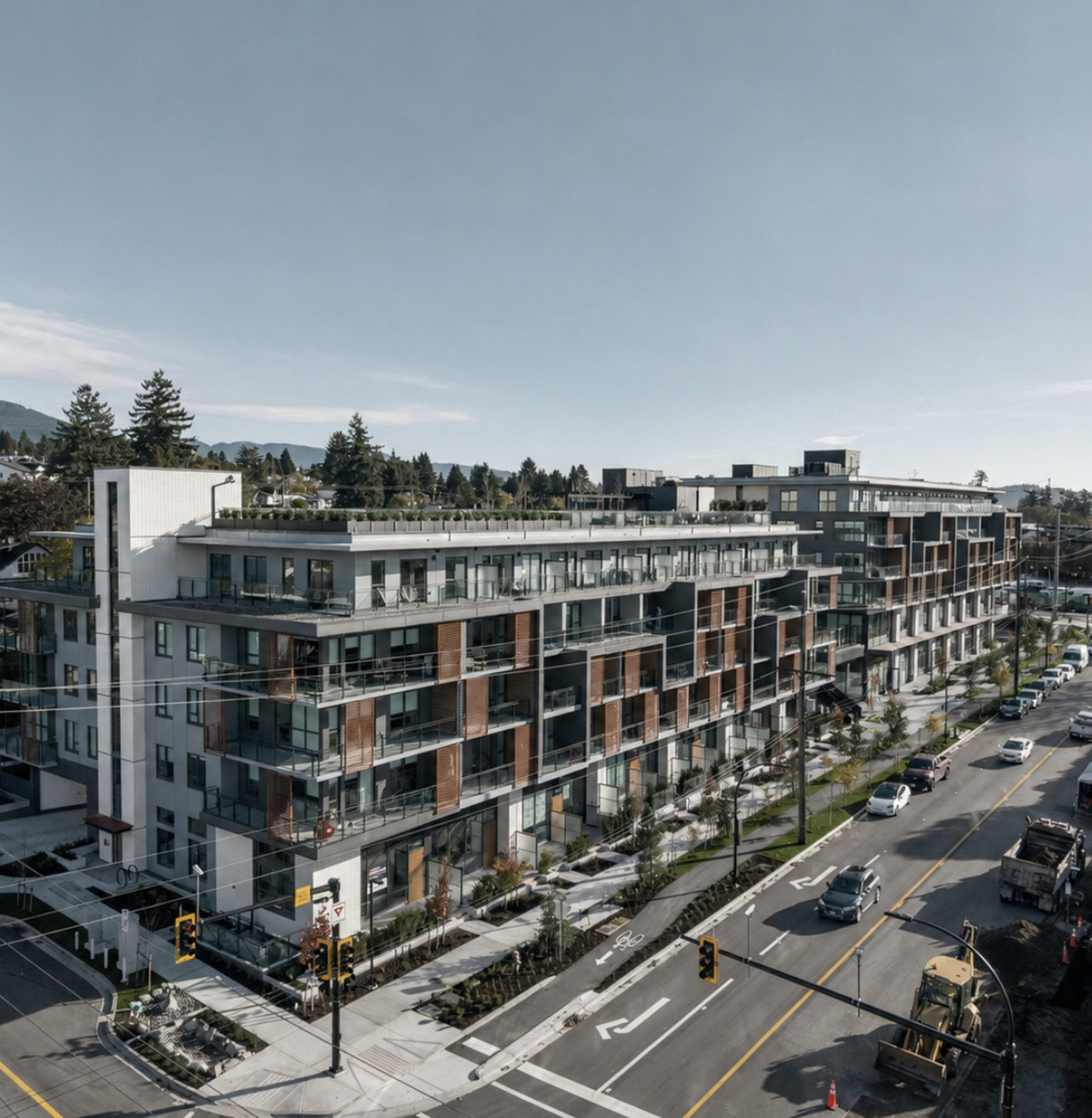
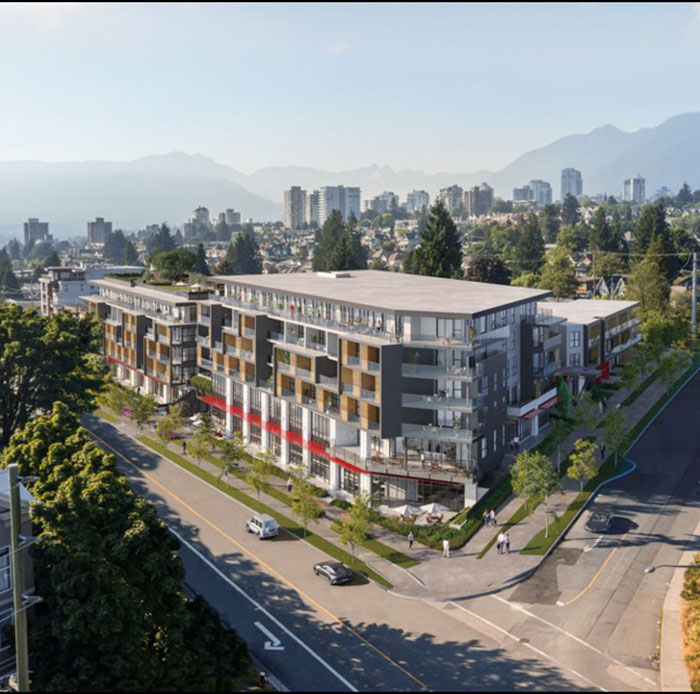
That philosophy became particularly visible through INNOVA, Cascadia Green Development’s major mixed-use development in North Vancouver.
Located at East 3rd Street and St. David’s Avenue, INNOVA was conceived as more than a residential development.
The project brings together homes, live-work spaces, professional offices, retail businesses, restaurants and community-oriented amenities within a connected development.
Combining Living, Working and Community Life
INNOVA reflects the changing relationship between home and work.
Live-work spaces and professional offices create opportunities for people to work closer to where they live, while commercial spaces introduce everyday services and businesses directly into the neighbourhood.
Residential uses are therefore integrated with a broader mix of activities instead of being separated from them.
This creates a community where residents can accomplish more of their daily routines without travelling long distances.
Creating Spaces for Families
Community infrastructure also plays an important role in the development.
INNOVA incorporates childcare facilities as part of its mixed-use environment, acknowledging that successful neighbourhoods need services that support families as well as housing.
Public and shared spaces further encourage interaction between residents, businesses and visitors.
A pedestrian-oriented public laneway and connections to surrounding greenways help integrate the development into the broader Moodyville neighbourhood.
Creating More Accessible Paths to Homeownership
Housing accessibility has also become an important part of Cascadia Green Development’s work.
The company has explored alternative approaches intended to help people who have the income required to support homeownership but face difficulty accumulating the large down payment required to purchase a home in Metro Vancouver.
This philosophy later contributed to initiatives such as Cascadia’s rent-to-own program, developed in collaboration with Community Savings Credit Union.
The concept reflects the company’s broader belief that developers can participate in finding creative responses to housing challenges rather than relying exclusively on conventional purchasing models.
Development Through Collaboration
Cascadia Green Development’s model places considerable importance on relationships.
Building communities requires collaboration among many different participants, including:
- Residents
- Municipal governments
- Architects and designers
- Engineers
- Construction professionals
- Investors
- Financial institutions
- Local businesses
- Community organizations
Strong relationships among these groups can help identify opportunities that might not emerge through a conventional development process.
Cascadia’s approach has therefore emphasized long-term partnerships and communication throughout the planning and construction process.
For the company, successful development involves finding solutions that work for investors and property owners while also creating meaningful benefits for residents and the surrounding community.
Changing the Face of Property Development
The North Shore News feature highlighted a different way of thinking about the role of a property developer.
A developer inevitably has responsibilities relating to financing, construction, approvals and investment performance. But the built environment also has long-lasting effects on how communities function.
Homes, businesses, streets and public spaces can shape neighbourhoods for generations.
Cascadia Green Development’s philosophy is built around recognizing that responsibility.
By considering environmental sustainability, social connection, economic prosperity, walkability and community participation together, the company seeks to create developments that contribute to the places in which they are built.
The result is an approach where success is measured not only by the completion of a building, but by whether the neighbourhood around it becomes a stronger and more connected place to live.
For Cascadia Green Development, that remains central to the idea of creating places that truly live.
Source and Attribution
This article is adapted from a feature originally published by North Shore News:
“How one North Vancouver company is trying to change the face of property development”
The original feature profiles Cascadia Green Development and the company’s community-focused approach to sustainable property development in North Vancouver.
Original source:
https://www.nsnews.com/sponsored/how-one-north-vancouver-company-is-trying-to-change-the-face-of-property-development-4174132
Original reporting and source material: North Shore News / Glacier Media. Adapted for the Cascadia Green Development website with attribution to the original publication.