Originally reported by Emma Caplan-Fisher for RENX – Real Estate News Exchange, May 25, 2026. This article has been adapted and republished by Cascadia with reference to the original RENX feature.
Canada’s health-care system continues to face mounting pressure from an aging population, increasing health-care expenditures and growing demand for accessible services. At the same time, a significant transformation is taking place within the commercial real estate market, with medical office properties attracting increasing interest from investors, developers and health-care professionals.
Ontario data from the Municipal Property Assessment Corporation shows that medical and dental properties have accounted for more than 20 per cent of new office buildings developed over the past 16 years, compared with a historical average of approximately 12 per cent.
The trend is also evident in British Columbia. Canadian Institute for Health Information data indicates that real per-capita health-care spending in B.C. increased faster than the national average between 2022 and 2024.
Increasing wait times, shortages of family physicians, pressure on hospital systems and insufficient public capital investment are all contributing to greater demand for privately owned medical office infrastructure.
Raman Bayanzadeh, Principal of CRE Investment and Development at Royal LePage Sussex and the professional currently marketing Cascadia, a purpose-built medical office presale project in North Vancouver, points to the existing shortage of health-care capacity as an important driver of the market.
Canada is already experiencing a shortage of medical and health-care services for its current population, making the challenge even greater when future population growth is taken into consideration.
Long-Term, Stable Tenants
Medical office real estate has several characteristics that distinguish it from conventional commercial office space.
Medical practitioners typically invest substantially in the spaces they occupy. Clinics may require specialized plumbing, electrical upgrades, ventilation systems, treatment rooms, medical equipment and highly customized interiors.
Because of the cost and complexity involved in creating these facilities, practitioners generally remain in the same location for extended periods.
Bayanzadeh explains that the level of investment practitioners make in their clinics often requires them to remain in a location for approximately 10 to 20 years for the investment to make economic sense.
Kate Camenzuli, Vice-President of Retail at CBRE, sees similar behaviour across the health-care real estate sector. Medical practitioners can remain in a location for 20 or even 30 years because of the significant investment required to build and operate their practices.
For property owners and investors, this creates the potential for exceptionally stable, long-term occupancy.
The Consumer-Facing Shift
The evolution of medical real estate is not simply about moving medical practitioners into retail centres or traditional office buildings.
Increasingly, medical facilities are being designed around the experience and convenience of the patient.
This includes bringing complementary health-care providers together within accessible, strategically located environments.
Camenzuli compares the approach to retail merchandising. Developers must consider how patients interact with the space, which services they want nearby and how easily they can access those services.
Accessibility becomes especially important within health care. Locating medical specialists high within conventional office towers, for example, can create significant accessibility challenges for patients.
Several broader demographic and economic changes are also contributing to demand.
Certain health conditions are appearing among younger populations, fertility challenges are increasing, and members of the so-called sandwich generation are simultaneously caring for their children and aging parents.
As a result, convenience has become increasingly important for health-care consumers.
Consolidation within the health-care sector is also playing a role, particularly as larger dental groups, medical aesthetics companies and other health-care organizations expand.
Purposefully grouping health-care services together can create what Bayanzadeh describes as a community health-care hub: multiple services available in one convenient location.
This model can benefit practitioners as well. When complementary services operate within the same facility, patients can more easily move between providers, helping reduce patient leakage and creating opportunities for greater collaboration.
A Reliable and Financially Stable Buyer Pool
Medical and medical-adjacent users have also become highly reliable purchasers of commercial real estate.
Geoff Duyker, Senior Vice-President at Mosaic Homes, notes that these businesses have become some of the company’s most dependable buyers of mixed-use commercial properties throughout projects in British Columbia’s Lower Mainland.
At Moody Yards, Mosaic’s city-block redevelopment in Port Moody, six of the nine commercial units sold were purchased by medical or medical-adjacent businesses.
One reason is the financial stability traditionally associated with many professional health-care practices.
Lenders generally understand the economics and long-term nature of these businesses, making financial institutions more comfortable providing financing to qualified medical practitioners.
Medical professionals also tend to enter the property market differently from conventional commercial buyers.
They may begin looking for space very early in a development’s sales process, sometimes before a project officially enters the market.
Many already know the community where they intend to establish their practice and have specific requirements relating to location, construction quality, accessibility and building infrastructure.
Another major factor is financing.
Medical practitioners may qualify for exceptionally favourable commercial real estate financing, including financing of up to 100 per cent in certain circumstances through financial institutions that operate dedicated professional lending programs.
This creates a substantial pool of motivated buyers who can have both strong borrowing capacity and long-term property requirements.
The combination provides developers and investors with greater confidence in the underlying demand for purpose-built medical space.
Over time, the market could also see increasing numbers of doctors purchasing their own commercial properties or entering ownership partnerships with landlords.
Why Purpose-Built Medical Space?
Purpose-built medical buildings represent an important evolution within the sector.
Traditional office and retail environments are not necessarily designed to support the technical requirements of modern medical practices.
Depending on the practitioner and specialty, medical facilities can require:
- Specialized plumbing infrastructure
- Increased electrical and power capacity
- Appropriate ceiling heights
- Enhanced HVAC and ventilation
- Specialized mechanical systems
- Greater structural load capacity
- Infrastructure capable of supporting imaging equipment
- Flexible clinical layouts
- Accessibility considerations specific to patients
Retrofitting a conventional office floor to accommodate these requirements can be both expensive and time-consuming.
A purpose-built medical building can address many of these requirements at the design and construction stage, before practitioners begin building their individual clinics.
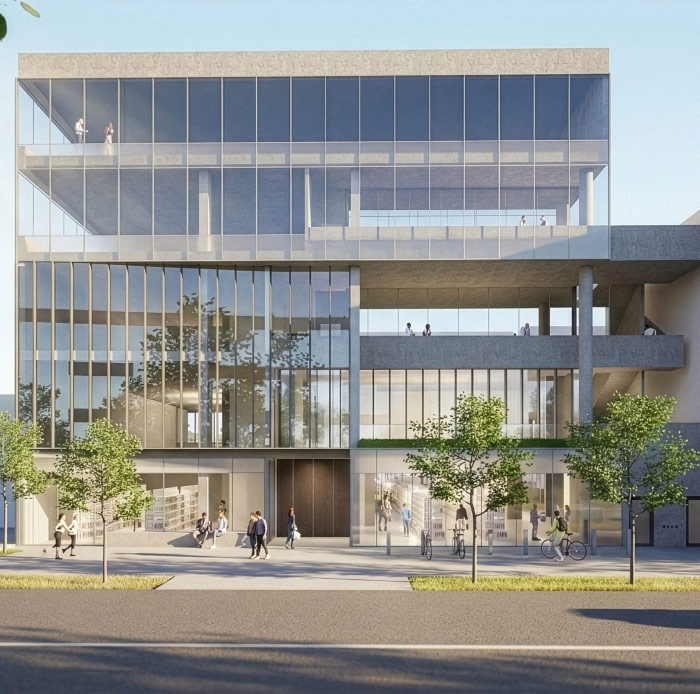
This is one of the central ideas behind Cascadia in North Vancouver, which is being developed specifically as a health-care-focused commercial environment rather than as conventional office space that is later adapted for medical use.
Potential Risks
Like any growing commercial real estate sector, medical office development is not without risk.
One potential concern is oversupply. If too many developers attempt to enter the medical property market simultaneously, certain areas could eventually develop more inventory than local demand can support.
Higher interest rates can also affect practitioners seeking to purchase commercial real estate.
Another challenge involves older medical office properties.
Historically, some landlords have invested relatively little in upgrading existing medical buildings. As new purpose-built facilities enter the market with improved infrastructure, accessibility and building systems, older properties may become increasingly difficult to compete with.
Nevertheless, the underlying fundamentals supporting medical real estate remain strong.
A Long-Term Opportunity
Canada appears to remain in the early stages of a broader transformation in how community health-care services are delivered.
Rather than relying exclusively on hospitals, institutional facilities or scattered individual clinics, the market is increasingly moving toward accessible, community-based health-care hubs capable of bringing multiple services together within one location.
For developers and commercial real estate investors, health and wellness properties are therefore becoming an increasingly important part of long-term real estate strategies.
Strong demand for health-care services, long-term medical tenants, attractive financing conditions for practitioners, specialized building requirements and increasing consumer demand for convenience all contribute to the sector’s long-term potential.
Projects such as Cascadia represent this new generation of purpose-built health-care real estate, combining specialized commercial infrastructure with the accessibility and convenience required by both practitioners and patients.
Source & Attribution
This article is adapted from reporting originally published by RENX – Real Estate News Exchange:
“The doctor is in: Medical office real estate emerges as stable, long-term play”
By Emma Caplan-Fisher
Published May 25, 2026
Read the original article on RENX:
https://renx.ca/the-doctor-is-in-medical-office-real-estate-emerges-as-a-stable-long-term-play
© Original reporting: RENX – Real Estate News Exchange. Adapted for the Cascadia website with attribution to the original source.